

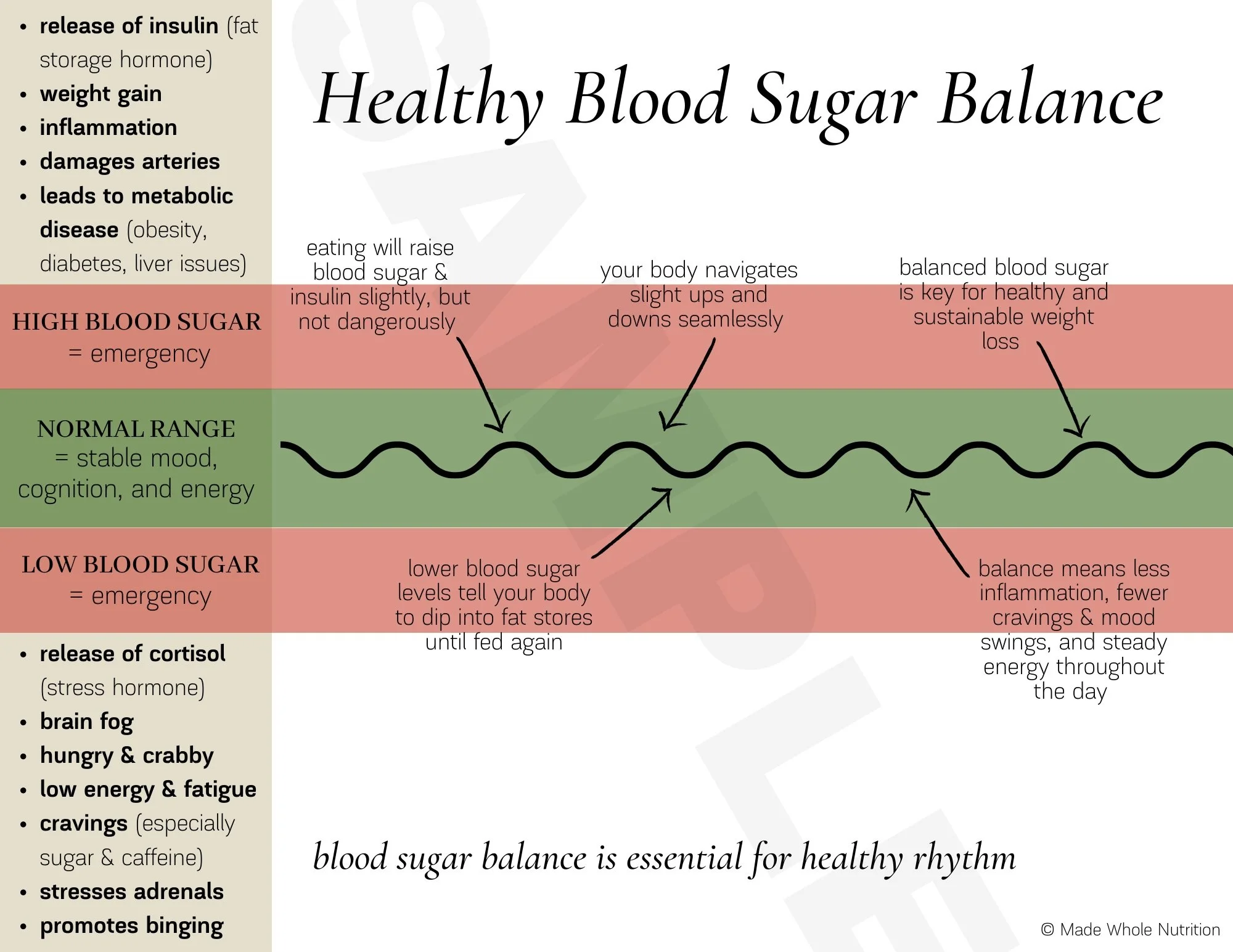
What does balanced blood sugar look like?

BLOOD SUGAR LEVELS
HIGH
= emergency
release of insulin (fat storage hormone)
weight gain
inflammation
damages arteries
leads to metabolic disease (obesity, diabetes, liver issues)
NORMAL RANGE
= stable mood, cognition, and energy
balanced stress response
mental clarity
mood stability
calibrated hunger signals
consistent energy
LOW
= emergency
release of cortisol (stress hormone)
brain fog
hungry & crabby
low energy & fatigue
cravings (especially sugar & caffeine)
HEALTHY BLOOD SUGAR BALANCE
your body navigates slight ups and downs seamlessly
balanced blood sugar is key for healthy & sustainable weight loss
eating will raise blood sugar & insulin slightly, but not dangerously
lower blood sugar levels tell your body to dip into fat stores until fed again
balance means less inflammation, fewer cravings & mood swings, and steady energy throughout the day
blood sugar balance is essential for healthy rhythm
Are you a health educator that wants to use this content with your clients? Customize the handout template in less time than it would take to even think about hiring a graphic designer.
handout template
After purchase, you’ll receive an email leading to a pdf with the editable Canva template link. Once on Canva, you have the ability to customize this handout to match your brand colors and fonts, add your logo, or resize to fit your needs!
References
Gaby, A. R. (2017). Nutritional Medicine (2nd ed.). Fritz Perlberg Publishing.
Jones, D. S., Bland, J. S., & Quinn, S. (2010). Textbook of Functional Medicine. Institute for Functional Medicine.
NTA Student Guide. (2019). Nutritional Therapy Association.Carbohydrates. (2019). The Nutrition Source. Havard School of Public Health. Retrieved from https://www.hsph.harvard.edu/nutritionsource/carbohydrates/.