

PROTEIN GUIDE: what labels to look for at the grocery store

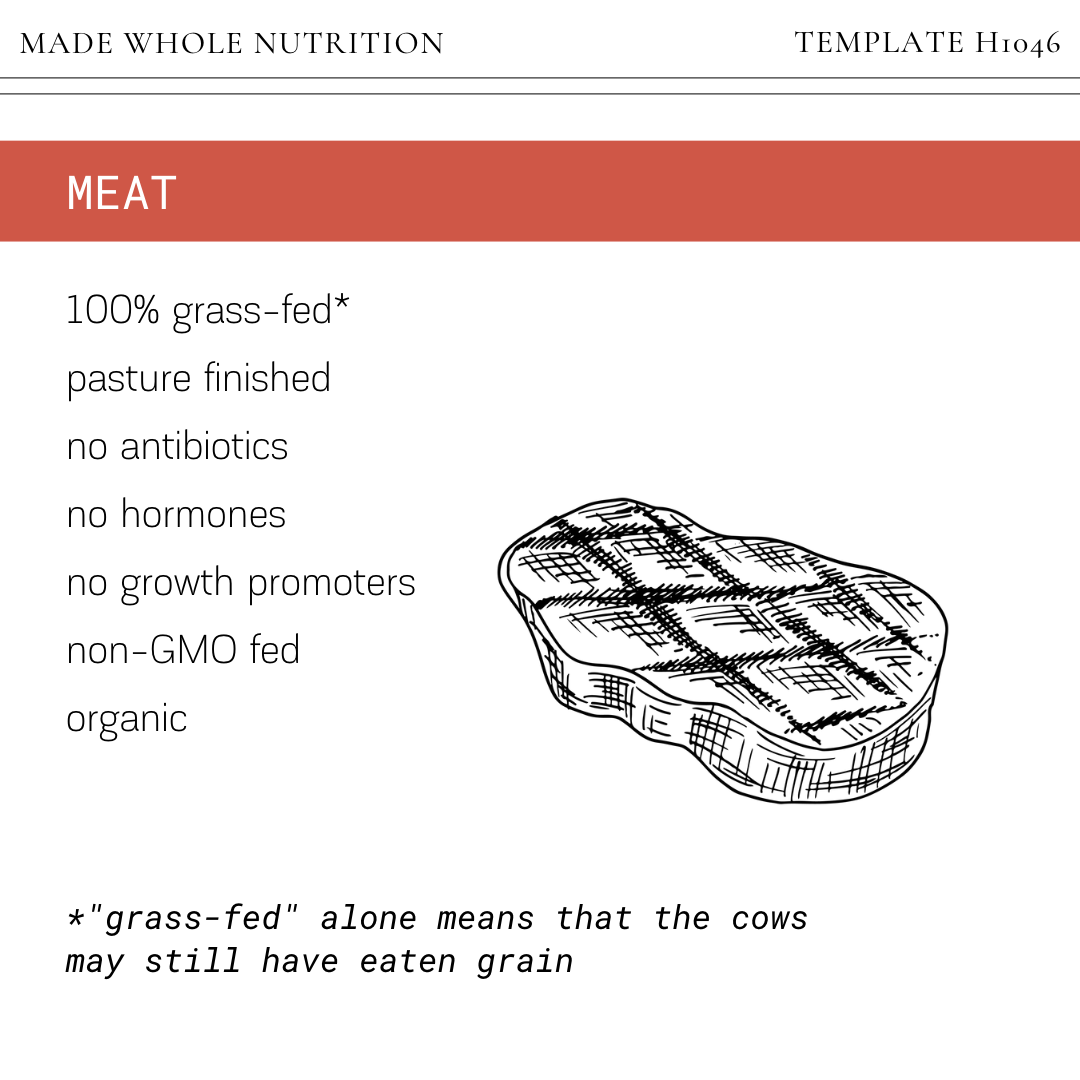
MEAT
100% grass-fed*
pasture finished
no antibiotics
no hormones
no growth promoters
non-GMO fed
organic
*"grass-fed" alone means that the cows may still have eaten grain
learn more about the differences between meat labeling terms
POULTRY + EGGS
pasture raised
free range
soy free
no antibiotics/hormones
no growth promoters
non-GMO fed
organic
*be careful: "all natural" is not a regulated term
DAIRY
same as meat standards
raw, unpasteurized
fermented
live active cultures
full-fat
A2
goat or sheep
healthy animals = healthy products
learn more about the differences between dairy labeling terms
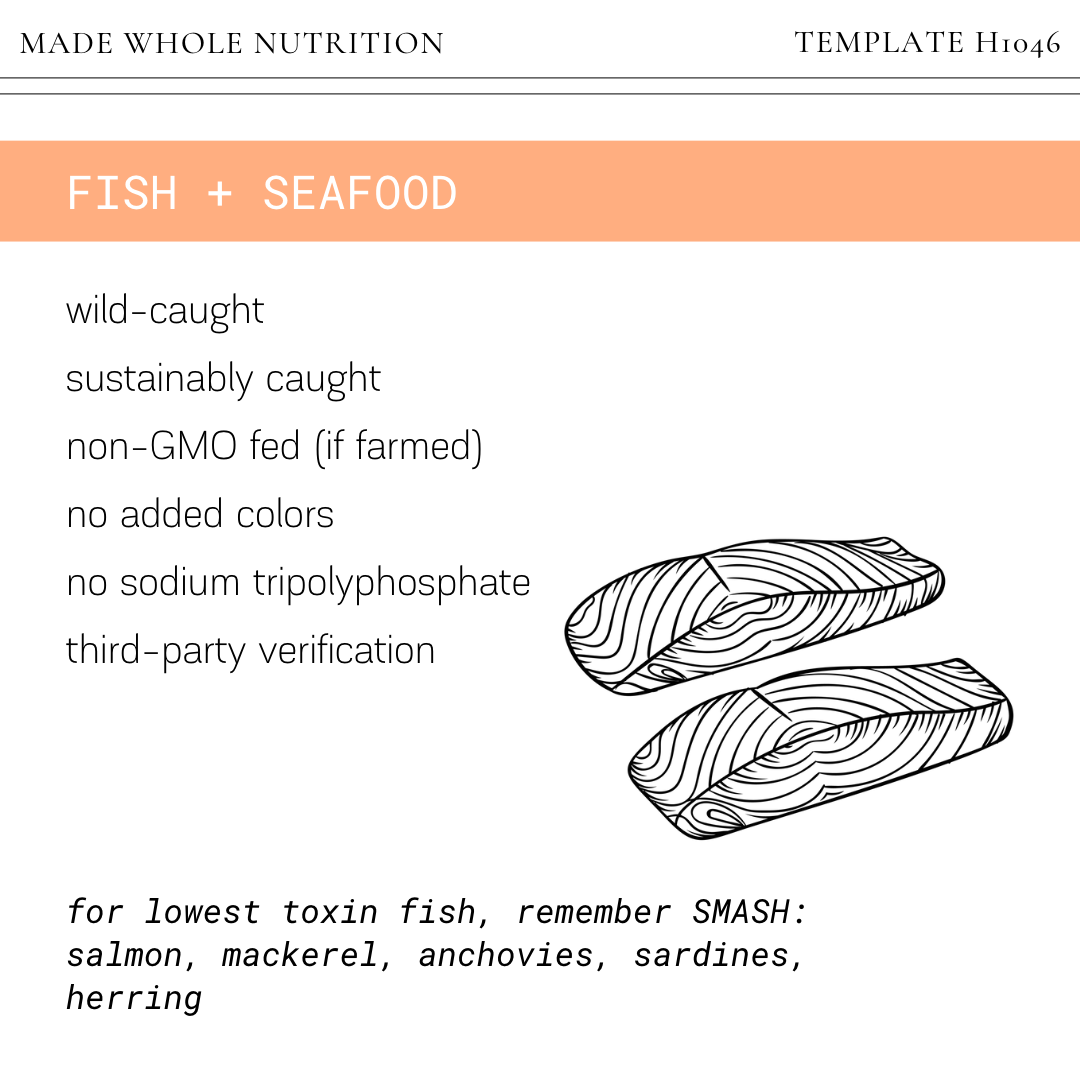
FISH + SEAFOOD
wild-caught
sustainably caught
non-GMO fed (if farmed)
no added colors
no sodium tripolyphosphate
third-party verification
for lowest toxin fish, remember SMASH: salmon, mackerel, anchovies, sardines, herring
Are you a health educator that wants to use this content with your clients? Customize the handout template in less time than it would take to even think about hiring a graphic designer.

handout template
After purchase, you’ll receive an email leading to a pdf with the editable Canva template link. Once on Canva, you have the ability to customize this handout to match your brand colors and fonts, add your logo, or resize to fit your needs!
References
Protein and Amino Acids. USDA National Agricultural Library. Retrieved from https://www.nal.usda.gov/fnic/protein-and-amino-acids.
Protein. (2019). The Nutrition Source. Havard School of Public Health. Retrieved from https://www.hsph.harvard.edu/nutritionsource/what-should-you-eat/protein/
U.S. National Library of Medicine. (2021). Dietary Proteins. MedlinePlus. Retrieved from https://medlineplus.gov/dietaryproteins.html.
Marine Conservation Society. Good Fish Guide. Retrieved from: https://www.mcsuk.org/goodfishguide/.