



WHEY
source: dairy milk
+ inexpensive
+ good for building muscle
+ popular taste & texture
- can be very processed
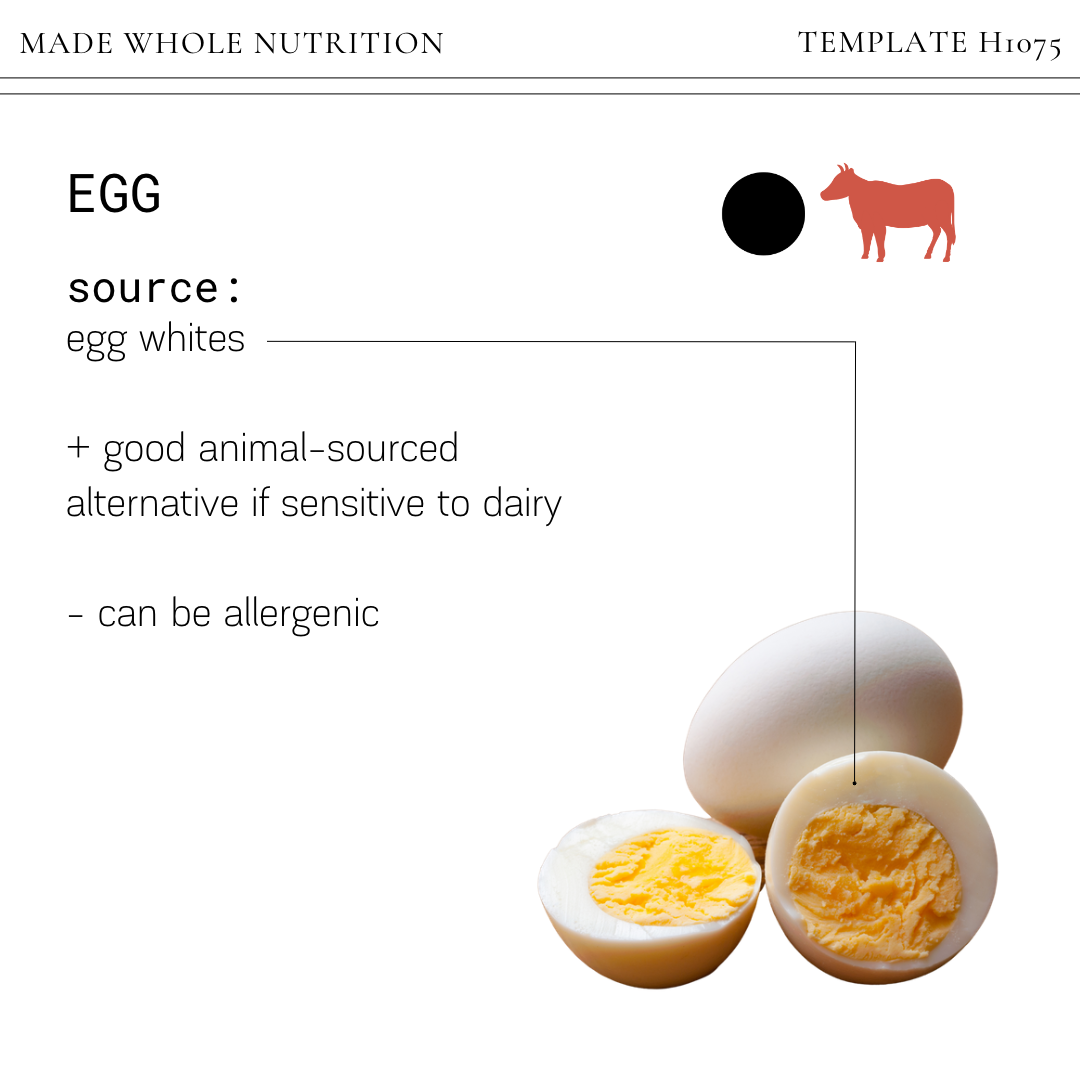
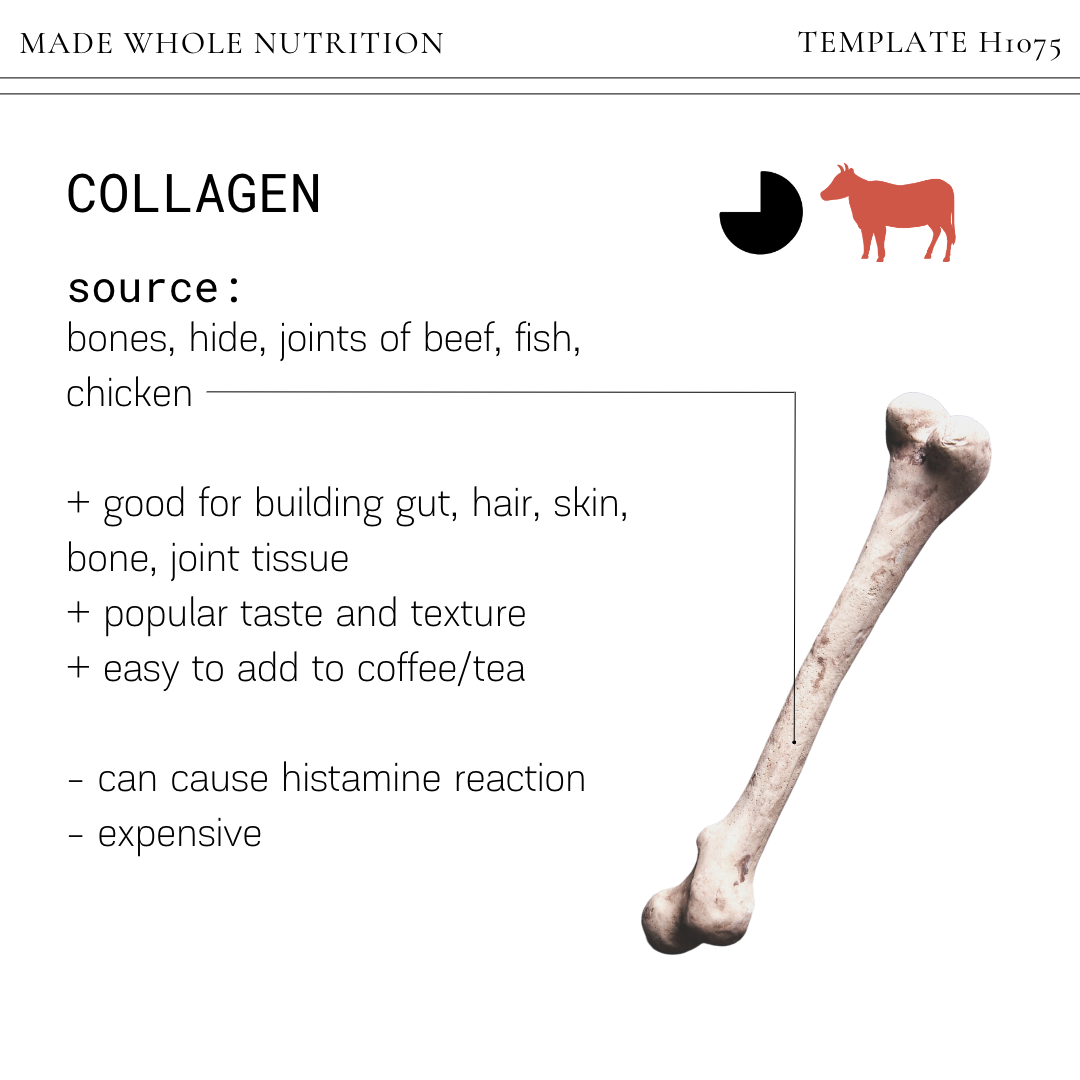
COLLAGEN
source: bones, hide, joints of beef, fish, chicken
+ good for building gut, hair, skin, bone, joint tissue
+ popular taste and texture
+ easy to add to coffee/tea
- can cause histamine reaction
- expensive
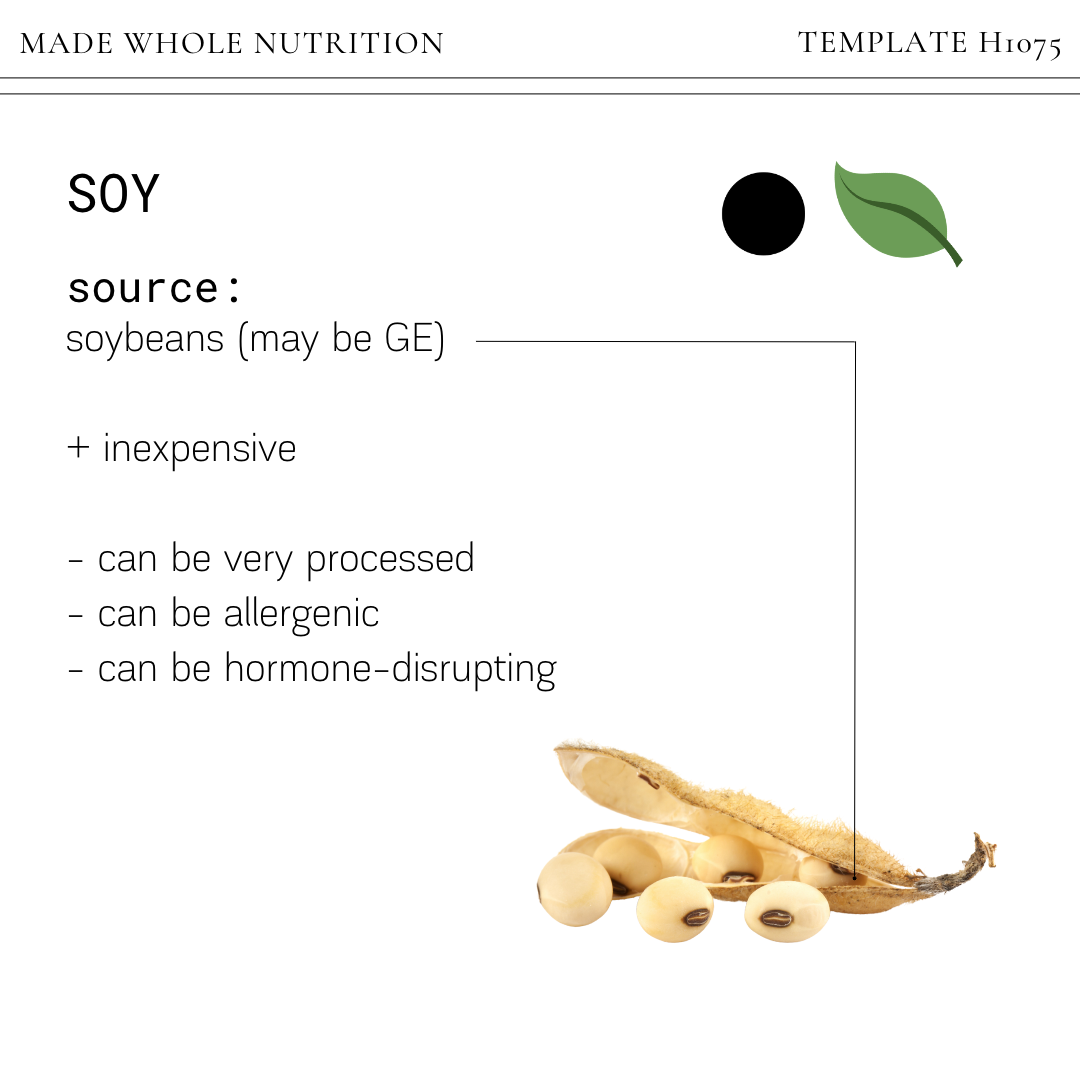
SOY
source: soybeans (may be GE)
+ inexpensive
- can be very processed
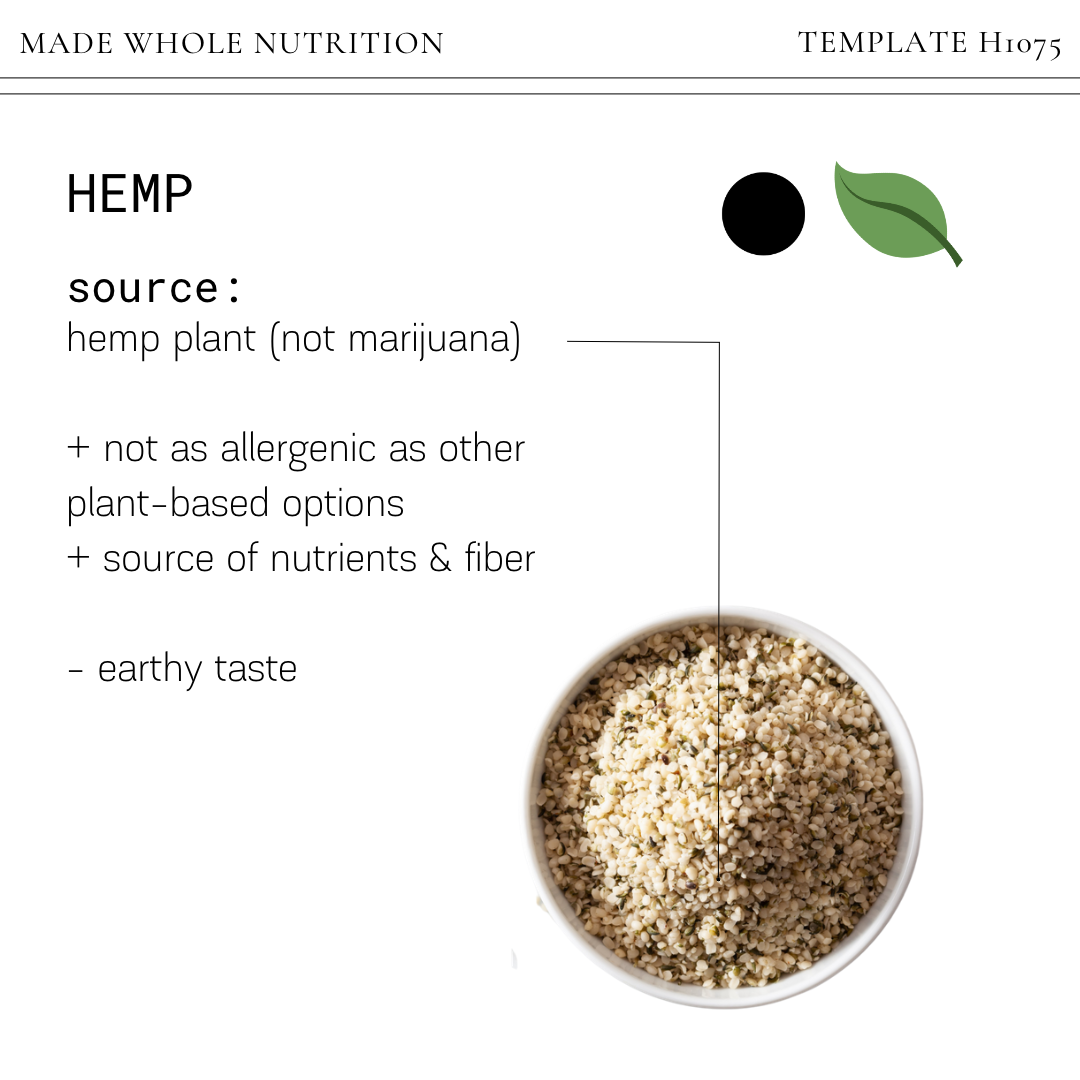
HEMP
source: hemp plant (not marijuana)
+ not as allergenic as other plant-based options
+ source of nutrients & fiber
- earthy taste
Are you a health educator that wants to use this content with your clients? Customize the handout template in less time than it would take to even think about hiring a graphic designer.

handout template
After purchase, you’ll receive an email leading to a pdf with the editable Canva template link. Once on Canva, you have the ability to customize this handout to match your brand colors and fonts, add your logo, or resize to fit your needs!
References
U.S. Department of Health and Human Services. Office of Dietary Supplements. NIH Office of Dietary Supplements. Retrieved from https://ods.od.nih.gov/factsheets/list-all/
Protein and Amino Acids. USDA National Agricultural Library. Retrieved from https://www.nal.usda.gov/fnic/protein-and-amino-acids.
Organic Consumers. The True Content and Faces Behind America’s Best-Selling Collagen. Retreived from https://www.organicconsumers.org/sites/default/files/collagen_white_paper.pdf
How to Choose the Best Protein Powder. (2020) Cleveland Clinic. Retrieved from https://health.clevelandclinic.org/7-tips-choosing-best-protein-powder/